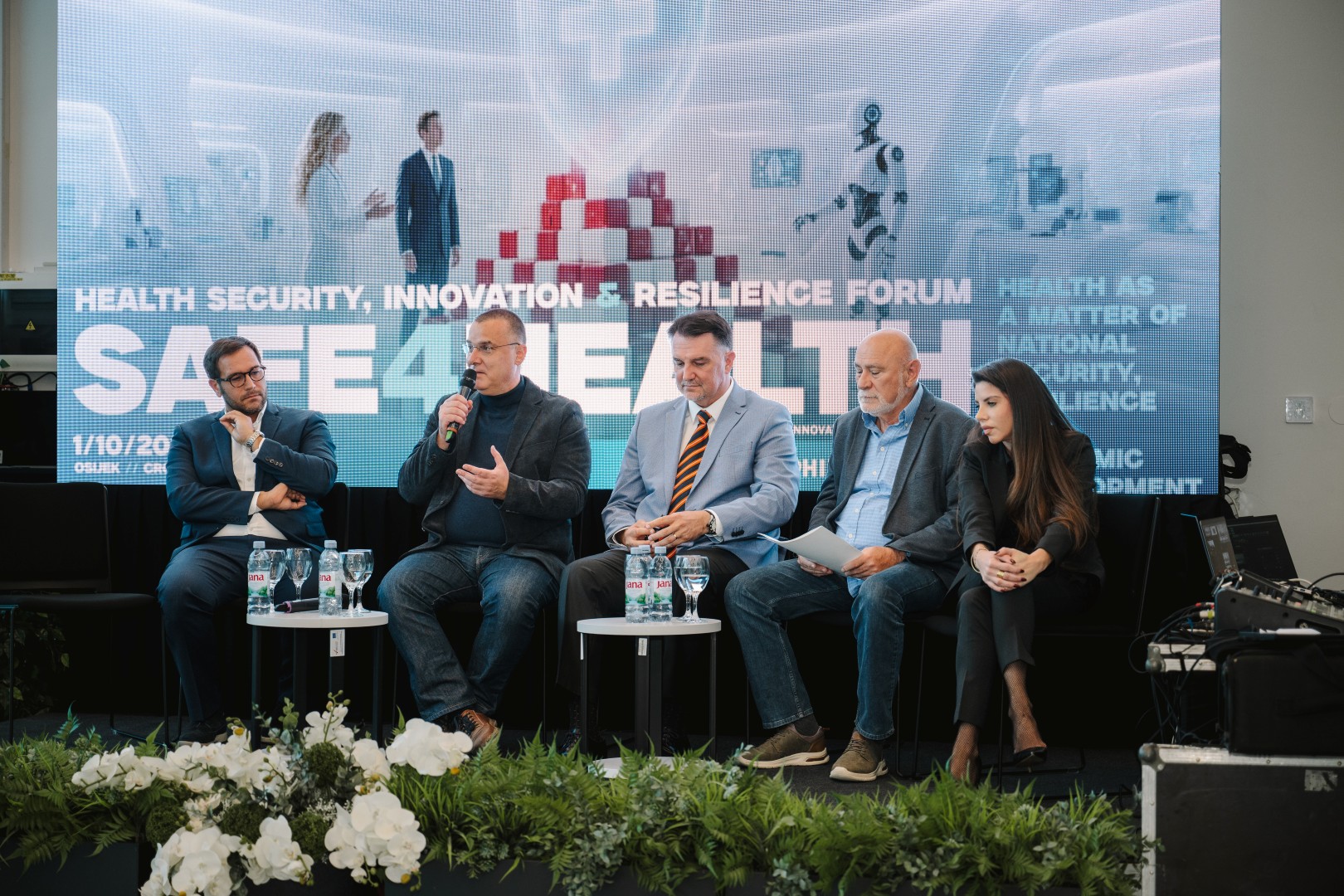


Anita Bujanić (Health Hub CEO): We have developed a multisectoral policy approach to reduce the burden of obesity in the EU: “CHAMPs Against Obesity- Why Health Systems Need a Sports Leadership Mindset”
besity represents one of the most pressing and costly challenges facing the European Union, with profound implications for population health, social cohesion, labour productivity, and long-term economic sustainability. Despite significant investment in prevention campaigns and advances in clinical treatment, obesity prevalence continues to rise across Member States, revealing structural weaknesses in current policy approaches.
Health Hub, regional healthcare think tank from Croatia, a well-known as a successful sport nation, proposes a new multisectoral policy model „CHAMPs Against Obesity“ – Framework that integrates obesity prevention and treatment within a long-term performance and leadership framework, inspired by principles from sports management, leadership psychology, and „champion“ development. This approach reframes obesity not as a short-term behavioural issue, but as a systemic, long-duration challenge requiring coordinated governance, aligned incentives, and sustained commitment across sectors.

“CHAMPs Against Obesity:
Why Health Systems Need a Sports Leadership Mindset”
A Multisectoral „Champion-Building“ Approach to Reduce the Burden of Obesity in the European Union
Obesity will not be solved by medicine alone—it requires the leadership mindset of a team determined to win.
Introduction
Despite unprecedented innovation in obesity and metabolic health care—from GLP-1 therapies to digital health solutions—countries continue to struggle with implementation, access, adherence and long-term outcomes. This lecture proposes a sports leadership mindset as a missing but critical lever in the global obesity response.
Drawing on principles from elite sport—strategic leadership, persistence, collective accountability, learning from setbacks, and a shared vision of victory—the talk reframes obesity not as a failure of individuals or systems, but as a winnable national and economic challenge.
The Scale of the Challenge
Obesity increases the risk of non-communicable diseases, strains health systems, reduces workforce participation, and deepens health inequalities. Its economic impact extends beyond healthcare expenditure to lost productivity, disability, and reduced competitiveness. Current EU-level strategies, while valuable, remain fragmented across policy silos, with limited integration between prevention, healthcare delivery, acess to innovative health technologies, education, urban planning, labour policy, and sport with proven impact on mental and physical wellbeing.
A more coherent and resilient framework is required – one capable of delivering durable outcomes over decades, rather than incremental or reversible gains.
A New Policy Paradigm: From Fragmentation to Aligned System Performance
Health Hub developed a new concept and recommends shifting from isolated interventions to a champion-building system model, similar to those used in elite sport and high-performance environments. In such systems, success is not accidental; it is the result of long-term vision, shared accountability, continuous performance monitoring, and the cultivation of psychological and institutional resilience.
Applied to obesity policy, this means:
- Treating prevention and treatment as interdependent components of a single policy continuum.
- Designing policies that support long-term adherence, not short-term compliance.
- Embedding leadership, motivation, and resilience into institutions—not only individuals.

Sport as a Strategic Partner in Health Policy
Health Hub’s approach recognizes sport not only as physical activity, but as a leadership and systems model. Sports organizations understand how to mobilize communities, create shared identity, measure performance, and sustain motivation over time. By integrating these competencies into health policy, obesity strategies gain cultural power, visibility, and emotional engagement – elements often missing from traditional public health approaches.
This integration allows prevention programmes to inspire, treatment pathways to support long-term adherence, and public narratives to shift away from stigma toward empowerment and collective optimism – and collective effort to „win the game“.
Sports leadership approach can be embedded across the health and societal ecosystem:
- in policy-making, by setting clear goals, performance indicators and long-term strategies
- in healthcare delivery, by supporting patient persistence, resilience and adherence
- in public narratives, by shifting away from stigma toward empowerment and collective optimism
- in multi-sector collaboration, aligning government, healthcare, industry, employers and communities around a shared “win”
By positioning obesity reduction as a collective mission rather than a fragmented intervention, this approach complements medical, surgical and digital innovations—helping countries translate investment into sustainable health and economic gains.

Integrating Sports Leadership Psychology Into EU Obesity Policy
Elite sport demonstrates how individuals and teams sustain effort under pressure, recover from setbacks, and remain committed to long-term goals. Health Hub proposes embedding these principles into EU obesity strategies through:
- Grit and perseverance: Supporting citizens and systems to persist despite slow or non-linear progress.
- Sustained commitment: Aligning funding, regulation, and evaluation with long-term horizons beyond political cycles.
- Aligned vision: Ensuring consistent objectives across health, education, transport, urban development, employment, and sport.
- Resilience and adaptive governance: Using data and evaluation to refine strategies rather than abandon them.
- Collective responsibility: Shifting the narrative from individual blame toward shared societal accountability.
The Multisectoral „CHAMPs Against Obesity“ Framework
Health Hub operationalises this approach through the „CHAMPs Against Obesity“ framework, which integrates medical innovation(s) with leadership, governance, social and economic alignment. The framework promotes coordinated action across healthcare systems, public health authorities, education sectors, workplaces, sports organisations, and local communities, positioning obesity reduction as a shared performance mission rather than a standalone health objective.
This model is consistent with EU priorities on:
- Prevention of non-communicable diseases
- Mental health and wellbeing
- Workforce resilience and productivity
- Social inclusion and equity
- Long-term fiscal sustainability
It needs to adress the important issues:
- Why obesity policy needs leadership frameworks, not only clinical or economic models
- How sports leadership principles improve patient engagement, adherence and long-term outcomes
- Reframing obesity as a national success metric, not a source of stigma
- Creating a “team mentality” across policymakers, clinicians, industry and citizens
- Why mindset is a critical economic variable in obesity prevention and care
Policy Implications for EU Institutions
Health Hub recommends that EU institutions:
- Adopt obesity as a cross-cutting strategic priority, embedded across health, education, sport, labour, and urban policy.
- Encourage Member States to integrate prevention and treatment pathways, supported by shared metrics and outcomes.
- Leverage sport and physical activity systems not only for movement promotion, but as platforms for leadership, focused mindset to tackle challenge, motivation, teamwork and community engagement.
- Support long-term policy continuity through multiannual funding frameworks and outcome-based evaluation.
- Promote a cultural shift from stigma and short-termism toward empowerment, resilience, and sustained participation.

Conclusion
Obesity is not a problem that can be solved through isolated measures or short-term interventions. Like elite performance, it requires preparation, leadership, teamwork, and belief in long-term success. By adopting a multisectoral, champion-building approach that integrates prevention, treatment, and leadership psychology, the European Union can reduce the burden of obesity on health systems, society, and the economy—while strengthening resilience and wellbeing for future generations.
Health Hub’s proposal is clear: obesity will not be solved by medicine alone, nor by isolated prevention campaigns. It requires champion-building systems—policies and institutions designed to cultivate resilience, leadership, and sustained effort across decades.
By integrating sports management principles, leadership psychology, and medical innovation into a single policy framework, Health Hub offers a model capable of delivering durable health, social, and economic benefits. Obesity, like elite performance, demands preparation, teamwork, and belief in long-term success. With the right mindset and structure, it is a challenge that can be met—and won.

🏆 CHAMPs Against Obesity //
A Leadership Framework for Winning the Obesity Challenge
The CHAMPs Against Obesity Framework positions obesity and metabolic health as a collective performance challenge with sport leadership mindset – requiring aligned leadership, cross-sector coordination and long-term policy commitment to deliver human, clinical and economic wins.
C — Collective & Community Impact
Obesity is addressed as a shared societal responsibility, mobilising governments, healthcare systems, education, sport, industry and communities around common goals, aligned incentives and measurable outcomes—supported by data-driven collaboration across sectors.
H — Human & Social Impact
The Framework prioritises dignity, empowerment and mental resilience, actively shifting narratives away from stigma toward collective optimism, sustained engagement and patient-centred care supported by digital tools and personalised interventions.
A — Access, Adherence & Accountability
Framework promotes equitable access to prevention, innovative therapeutic treatments and comprehensive care pathways, while strengthening long-term adherence through digital health solutions, AI-enabled monitoring and clear accountability for reaching the goals in fight against obesity across institutions and policies.
M — Metabolic & Clinical Outcomes
Evidence-based therapeutic innovation- including pharmacological, surgical and lifestyle interventions- is combined with dana-driven and AI-supported care to ensure improvements in metabolic health translate into measurable, real-world clinical outcomes.
P — Productivity, Policy & Economic Impact
By recognising the value of medical and digital innovation, Framework links obesity reduction to workforce productivity, healthcare system sustainability and economic resilience, positioning metabolic health as a strategic investment with long-term returns rather than a cost.

Anita Bujanić, MA Pharm, MA Health Management (Founder & CEO of Health Hub(
Why we created CHAMPs Against Obesity Framework?
Remarks of HH Founder, Anita Bujanić, MA Pharm, MA Health Management
“I am the Founder and Director of a Health Hub, 1st health-policy think tank focused on systemic transformation of healthcare in Croatia and region. My work in past 20 years is at the intersection of health economics, leadership and public policy, with a particular focus on NCD’s prevention and sustainable care models. As a health system strategist and founder of a health-policy think tank, I have been involved in many international and national healthcare initiatives, supported from European Commission, European Parliament, WHO, patient and HCPs organisations.
Through its work, Health Hub has consistently built a positive and practical synergy between the sports sector and healthcare policy, recognising sport not only as physical activity, but as a leadership and mindset model for health systems.
Health Hub has delivered several initiatives that successfully connected sport, public health and policy. One of its flagship projects, Tip Top Generation, promoted healthy lifestyles among young people and mobilised the entire national sports ecosystem—from the Olympic Committee to school and university sports associations—around a shared health goal. We have signed a contract of collaboration on health projects with Unisport.HR – EUSA Member, and Croatia will host in Split 2028 European Student Sport Games with 5000 young students with mindset that could shape healthier future for Europe!
This approach was further expanded through initiatives such as Sport Against Cancer, as well as the development of a dedicated publication exploring the importance of collective optimism in healthcare and what health systems can learn from athletes: resilience, persistence, goal-orientation, learning from setbacks and collective responsibility for results.
Health Hub believes that obesity and metabolic health require the same mindset shift—from fragmented efforts to a team-based, goal-driven approach, where all sectors run the same relay race towards better health outcomes. This unique, sport-inspired leadership perspective offers a fresh contribution to the global obesity debate and complements medical, technological and policy solutions already on the table.
Health Hub aims to introduce a new way of thinking about obesity—as a challenge that can be collectively prepared for, managed and ultimately won.
We are more than motivated to create a unique cross-sector perspective on how (sport) leadership mindsets in healthcare ecosystem shape health outcomes at population level and we are honoured to add a sports leadership mindset into the policy shaping activities and economics of obesity and metabolic health.”